
Should You Inspect Your Home Before Listing? The Answer Might Surprise You 🔍
A pre-inspection before listing sounds like a smart move — but in New York it can create disclosure obligations that wouldn't have existed otherwise. Here's what most sellers don't consider before making this decision.
Thomas Brady
2/27/20262 min read

Should You Inspect Your Home Before Listing? The Answer Might Surprise You 🔍
One question we get asked a lot is whether sellers should do a pre-inspection before listing. It sounds like a smart move — and in some ways it is. But there's a side to it that most sellers don't consider until it's too late.
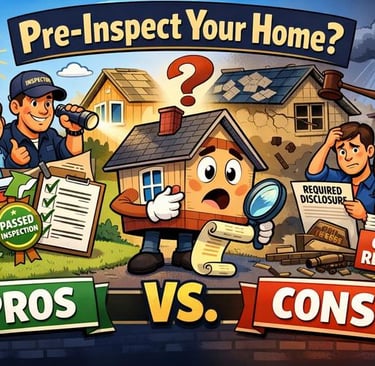
The Case For It ✅
A pre-inspection can help you identify issues before a buyer does, potentially avoid surprises that derail a deal at the last minute, and signal to buyers that you're a transparent, confident seller. On paper, it sounds like taking control of the process — and that's exactly why so many sellers consider it.
The Case Against It ⚠️
Here's where it gets tricky. Once an inspection is done, anything it uncovers becomes something you legally know about. And in New York, what you know, you may be required to disclose. That means a pre-inspection could actually create obligations that wouldn't have existed if you'd never done it in the first place.
No two inspectors see things exactly the same way. What one considers a significant issue, another may not even flag. When you do a pre-inspection you are in effect inviting multiple sets of eyes over the same property — and the first set may be the most consequential. If your pre-listing inspector notes something as a concern — even something a buyer's inspector might never have mentioned — you've now created a disclosure obligation and a potential obstacle to your sale that simply didn't need to exist.
The Disclosure Problem 📋
New York's disclosure requirements are worth understanding before you make this decision. Sellers are required to disclose known material defects to buyers. The operative word is known. A pre-inspection converts unknown conditions into known ones — and once that happens, there's no going back.
The irony is that the buyer's inspector may never have found the same issue, flagged it the same way, or considered it significant enough to raise. But because your pre-listing inspector put it in writing, it's now on your radar and potentially on your disclosure statement.
When a Pre-Inspection Might Make Sense 🏚️
There are exceptions. If you already know your home has significant issues and you want to understand the full scope before pricing it, a pre-inspection can help you make informed decisions. Similarly, if you're selling an older home in an area where buyers routinely waive inspections in competitive situations, having a clean pre-inspection report available could be a meaningful selling tool.
But these are specific circumstances, not the general rule. For most Long Island sellers with a reasonably maintained home, the risks outweigh the benefits.
Our Take 🏡
For most sellers, we advise skipping the pre-inspection. The potential to create disclosure obligations that wouldn't otherwise exist is a real risk — and one that's entirely avoidable. Price your home correctly, prepare it well, and let the buyer's inspector do their job. That's the process working as it should.
This is exactly the kind of decision where having an experienced broker in your corner makes a real difference. The wrong move before you even list can cost you.
Have Questions About Your Specific Situation? 📞
Every home and every seller is different. We're happy to talk through where you stand and what approach makes the most sense for you — no pressure, no obligation.
Thomas Brady SFR, e-PRO, SRES, BPOR, C-REPS Licensed Associate Real Estate Broker / Director of Operations Notary Public | Retired N.Y.P.D. Lt. | U.S. Air Force Veteran 🇺🇸
Vintage American Realty LLC 1551 Montauk Hwy, Suite E • Oakdale, NY 11769 📞 631-682-8660 ✉️ TomBradyHomes@Gmail.com 🌐 VintageAmericanRealty.com
Vintage American Realty, LLC
Vintage American Realty, LLC is licensed in the State of New York
broker: 631.816.0719
info@vintageamericanrealty.com
1551 Montauk Hwy, Ste E
Oakdale, NY 11769
Long Island, NY